
2. Test Your Thermostat Before Temperatures Drop
Your thermostat controls when the furnace runs. Incorrect settings or outdated heating schedules can affect comfort even when the furnace itself is working normally.
Before winter:
- Set the thermostat to HEAT.
- Make sure the temperature setting matches your comfort needs.
- Review programmed schedules, especially if you changed them during warmer months.
- Check for low-battery warnings if your thermostat uses batteries.
- Confirm that the fan setting is appropriate for your heating system.
For many conventional forced-air systems, AUTO allows the blower to run as part of the heating cycle rather than continuously. Follow your thermostat and equipment instructions for the appropriate setting.
You’ll check how the furnace responds to the thermostat when you test the heating cycle in Step 7.
3. Make Sure Supply Vents and Return Air Grilles Are Clear
Walk through your home and check the vents that deliver warm air and the return air grilles that allow air to circulate back through the heating system.
Look for:
- Furniture blocking floor or wall vents
- Rugs covering floor registers
- Curtains or other household items restricting airflow
- Closed registers in rooms that normally receive heat
Keep supply and return openings unobstructed. Avoid closing multiple vents to redirect heat unless your system is specifically designed for that arrangement.
If one bedroom or another area of your Avon Lake home consistently feels colder than the rest, make a note of it.
Uneven temperatures can sometimes involve airflow or heat distribution rather than a problem with the furnace itself. An HVAC technician can evaluate these concerns if they continue.
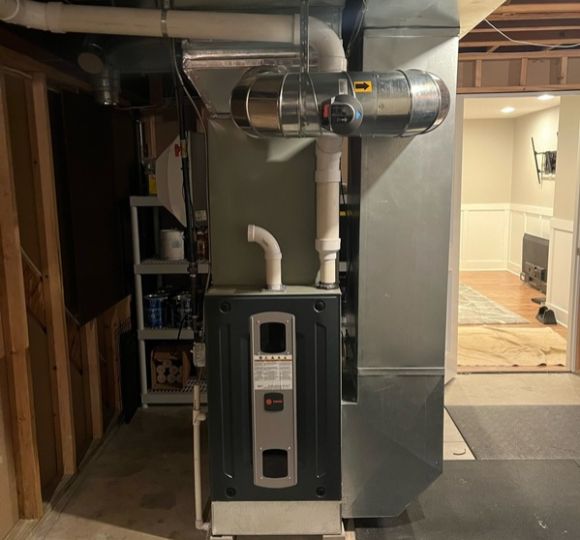
4. Keep the Area Around Your Furnace Clear
Many homeowners store household supplies in basements, utility rooms, or nearby storage spaces. Over time, boxes and other belongings can accumulate around heating equipment.
Before winter:
- Remove cardboard boxes and other stored items from around the furnace.
- Keep flammable materials and household chemicals away from the equipment.
- Make sure combustion air openings remain unobstructed.
- Leave enough accessible space for a technician to inspect and service the system.
- Check for visible water around the furnace without opening its panels.
A clear furnace area helps maintain safe operating conditions and makes routine maintenance easier.
If you notice unexplained water around your furnace, particularly a high-efficiency model, have a technician investigate. Don’t attempt to disconnect drainage lines or access internal components yourself.
5. Check Outdoor Furnace Vents After Snowfall
Some high-efficiency gas furnaces use intake and exhaust pipes that terminate outside the home, often through an exterior wall.
In Avon Lake, winter snow and ice can accumulate around these openings, potentially interfering with proper furnace operation.
If your home has an accessible exterior furnace vent:
- Look for snow buildup around the intake or exhaust opening.
- Check for visible ice or other obstructions.
- Carefully clear surrounding snow if you can do so safely without disturbing the vent.
- Check the area again after heavy snowfall or drifting snow.
Not every furnace has the same venting configuration. Some use roof vents or other locations that homeowners cannot safely access.
Never disconnect, modify, or forcefully break ice away from furnace vent pipes. Don’t climb onto a roof to inspect an inaccessible vent.
If you suspect a furnace vent is blocked and you can’t safely clear the surrounding snow, stop using the affected equipment and contact a qualified technician.
6. Test Your Carbon Monoxide and Smoke Alarms
Carbon monoxide safety is especially important in homes with gas furnaces and other fuel-burning appliances.
Carbon monoxide is an odorless, colorless gas that can accumulate when equipment malfunctions or combustion gases aren’t vented properly.
As part of your winter preparation:
- Make sure carbon monoxide alarms are installed on every level of your home and outside sleeping areas, following applicable requirements and manufacturer instructions.
- Test carbon monoxide and smoke alarms monthly.
- Replace batteries or backup batteries when needed.
- Check the manufacturer’s replacement date for each alarm.
If a carbon monoxide alarm sounds, get everyone outside immediately and call 911 from a safe location. If you smell natural gas, leave the home without operating electrical switches or equipment, and contact your gas utility or emergency services once outside.
Working alarms provide an important layer of protection, but they don’t replace proper furnace inspection and maintenance.
7. Run the Furnace and Pay Attention to Its Operation
Once you’ve checked the basic items, observe your furnace during a normal heating cycle.
Set the thermostat a few degrees above the current room temperature and allow the system time to respond.
Pay attention to the following:
- Startup: Does the furnace begin operating when the thermostat calls for heat?
- Warm air: Does warm air reach the rooms throughout your home?
- Temperature: Does the indoor temperature gradually rise toward the thermostat setting?
- Heating cycle: Does the furnace complete its cycle without repeatedly stopping and restarting?
- Unusual sounds: Do you hear any new or unfamiliar noises?
You don’t need to diagnose anything yourself. Simply pay attention to whether your furnace operates the way it normally does.
If something seems different, record what you’ve noticed. This information can help an HVAC technician understand your concern during a service visit.
What Should You Leave to an HVAC Professional?
Your furnace maintenance checklist covers basic tasks you can perform without opening the equipment. However, internal electrical components, combustion systems, and safety controls require professional inspection.
Copperline LLC Heating and Air Conditioning provides heating system maintenance for homeowners in Avon Lake and surrounding Northeast Ohio communities. Our technicians work with Trane equipment and systems from many other major HVAC manufacturers.
If your furnace hasn’t been serviced according to its recommended maintenance schedule, consider arranging a professional inspection before heavier winter use.
You can also explore Copperline’s Preventative Maintenance Plans for regularly scheduled seasonal heating and cooling maintenance.
What If You Notice a Problem During Your Furnace Check?
If your furnace repeatedly shuts down, struggles to heat your home, or produces cold air instead of heat, it may need more than routine maintenance.
Rather than attempting internal repairs, have a qualified technician evaluate the system.
For more information about heating problems, see our article on why your furnace may be blowing cold air.
You can also contact Copperline LLC for furnace repair services in Avon Lake and surrounding communities.
Keep Your Furnace Ready for Avon Lake's Winter Weather
A few simple checks can help you spot potential heating issues before the colder months put more strain on your furnace.
For maintenance that goes beyond what homeowners can safely inspect, Copperline LLC Heating and Air Conditioning is here to help.
We’ve served Avon Lake and surrounding Northeast Ohio communities since 2010, providing furnace maintenance, repair, and heating services based on each system’s condition.
Whether your furnace is due for seasonal maintenance or you’ve noticed something unusual during your winter checks, contact Copperline Heating and Air Conditioning to schedule professional service.
Frequently Asked Questions
How often should a furnace be serviced?
Most furnaces should receive professional maintenance once a year, ideally before the heating season. Follow your equipment manufacturer’s recommendations. If you missed a fall appointment, you can still arrange maintenance during winter.
Does a new furnace still need annual maintenance?
Yes. Even newer furnaces need routine inspections to check system operation, airflow, and safety controls. Regular maintenance may also be required under your manufacturer’s warranty, so review the terms for your specific equipment.
How long does furnace maintenance take?
A typical professional furnace maintenance visit may take one to two hours, depending on the equipment’s condition, accessibility, and required checks. Copperline LLC can discuss scheduling expectations when you book your appointment.
Does Copperline LLC offer preventative maintenance plans for furnaces?
Yes. Copperline LLC offers Preventative Maintenance Plans with semi-annual HVAC cleaning and maintenance visits, scheduling reminders, and additional service benefits. These plans help Avon Lake homeowners stay on schedule with seasonal heating and cooling maintenance.
What happens if Copperline LLC finds a problem during furnace maintenance?
Our technicians explain the issue and recommend appropriate next steps based on your furnace’s condition. If additional repairs are needed, we’ll discuss the findings and recommendations before proceeding.


