
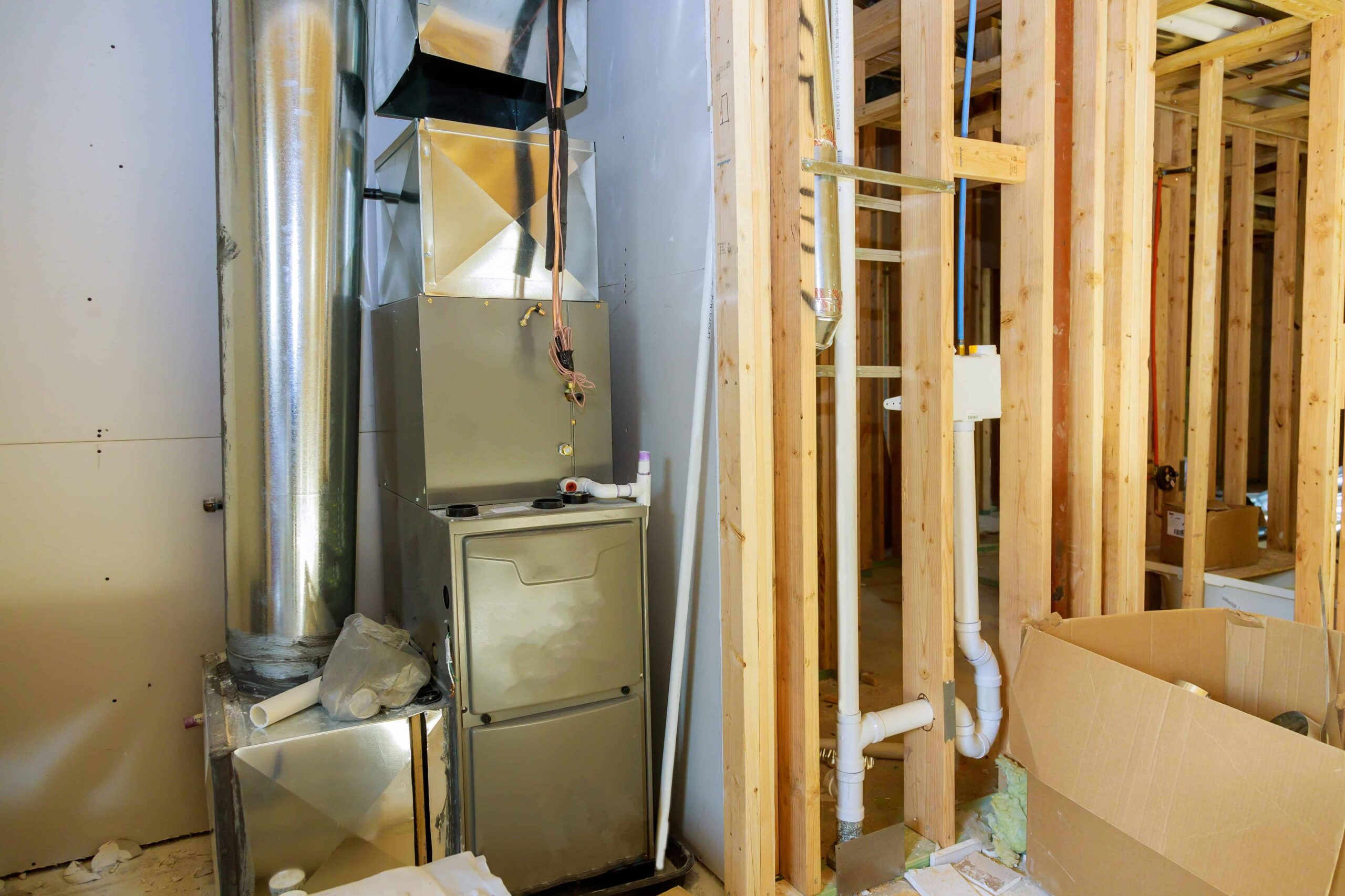
Common Reasons Your Furnace Is Blowing Cold Air
1. The Thermostat Fan Is Set to ON
Start with the thermostat.
Most thermostats have an AUTO and ON setting for the fan. When the fan is set to ON, the blower can continue circulating air even when the furnace isn’t actively producing heat.
That means the air coming through your vents may eventually feel cool even though the blower itself is operating normally.
Check that your thermostat is set to HEAT and the fan is set to AUTO. With AUTO selected, the blower should typically run as part of the heating cycle rather than continuously.
If the settings are correct and the vents are still blowing cold air, another issue may be affecting the system.
2. A Dirty Air Filter Is Restricting Airflow
Your furnace needs enough airflow to operate properly.
A heavily clogged filter makes it harder for air to move through the system. When airflow becomes too restricted, the furnace can overheat and trigger a safety control that stops heating.
The blower may keep running, sending air through the vents but delivering little or no heat.
If your filter is accessible, check it. If it is visibly dirty and due for replacement, call a technician to install the correct replacement filter for your system.
If the furnace keeps blowing cold air after replacing the filter, another issue may need to be diagnosed.
3. The Furnace Is Not Igniting Properly
If the blower is running but the furnace isn’t producing heat, the problem may be somewhere in the ignition process. Depending on the system, that could involve an igniter, flame-sensing component, control, or another part of the heating sequence.
These are not components we recommend taking apart or adjusting yourself. Furnaces combine electrical components, fuel-burning equipment, and safety controls that need to operate together correctly.
Once you’ve ruled out basic thermostat and filter issues, a furnace that still won’t produce heat should be professionally diagnosed.
4. The Furnace Is Shutting Down Too Soon
If your furnace starts heating and then shuts down before your home reaches the thermostat setting, a safety control may be interrupting the heating cycle.
This repeated starting and stopping is often called furnace short cycling. It can happen because of restricted airflow, control problems, or other equipment issues.
If you notice this pattern along with cold air coming from the vents, have the system checked rather than repeatedly resetting it.
5. There Is a Thermostat or Control Problem
An incorrect thermostat setting is different from a thermostat or control that isn’t working properly.
If you’ve already confirmed that the thermostat is set to HEAT, the fan is set appropriately, and the target temperature is above the current indoor temperature, the system should be receiving a request for heat.
If it isn’t responding correctly, the problem may involve the thermostat, its communication with the furnace, or another system control.
You may notice the blower operating at unexpected times, the furnace failing to start consistently, or indoor temperatures that don’t match what the thermostat shows.
In that situation, we want to evaluate how the controls and heating equipment are working together rather than simply changing the thermostat settings again.
6. A High-Efficiency Furnace Has a Venting or Condensate Issue
High-efficiency furnaces create condensation during normal operation.
If the condensate drainage system, venting, pressure controls, or another related safety component has a problem, the furnace may prevent normal heating operation.
You might still hear the system running or feel air moving through the vents even though the furnace isn’t producing the heat you expect.
Because these systems include built-in safety controls, we don’t recommend bypassing switches or making internal adjustments yourself. If your heating stops working, diagnose the cause first.
What Can You Safely Check Before Calling a Technician?
Before calling for furnace repair services, you can check a few simple things without opening the equipment or working inside it.
Check the Thermostat
Make sure the thermostat is set to HEAT, and the target temperature is set higher than the current room temperature. Also confirm that the fan is set to AUTO, not ON. If your thermostat uses batteries, check for a low-battery warning or blank display and replace the batteries if needed.
Check the Air Filter and Vents
Look at the furnace filter for heavy dust or debris buildup. Make sure supply registers and return vents are open and aren’t blocked by furniture, rugs, curtains, or stored items.
If you can see a diagnostic code through a viewing window or on the thermostat without opening the furnace, write it down or take a photo. That information may help us narrow down the problem when we evaluate the system.
When Should You Call for Furnace Repair?
If the thermostat settings look correct, the filter is in good condition, and your furnace continues blowing cold air, it’s time to have the system checked.
We would also recommend calling if:
- Your furnace continues blowing cold air after you check the thermostat and filter.
- Your home can’t reach the temperature set on the thermostat.
- The furnace repeatedly starts and stops while trying to heat.
- Warm air turns cold before the heating cycle finishes.
- The system stops producing heat altogether.
Cold air does not automatically mean you need a new furnace. The first step is figuring out what is preventing the system from heating correctly. Once we know the cause, we can explain what we found and whether a repair is actually needed.
Safety comes first in some situations.
If you smell gas, leave the home and, from a safe location, contact your gas utility or the appropriate emergency service. If a carbon monoxide alarm sounds, leave the home and follow the alarm manufacturer’s and local emergency guidance.
Don’t continue operating the furnace while trying to determine the cause yourself.
Still Getting Cold Air From Your Vents?
If you’ve checked the basics and your furnace still isn’t heating your home properly, you shouldn’t have to guess at the cause.
At Copperline LLC Heating and Air Conditioning, we evaluate the heating system and controls to understand what’s happening before recommending a repair.
If you need furnace repair in Bay Village, Avon Lake, or another Northeast Ohio community we serve, contact our team. We’ll explain what we find clearly and recommend furnace repair when the diagnosed problem calls for it.
Frequently Asked Questions
How do you fix a furnace that blows cold air?
Start with the basics: make sure the thermostat is set to HEAT, the fan is set to AUTO, and the furnace filter isn’t heavily clogged. If the furnace still blows cold air after those checks, the issue may involve the ignition system, controls, or another component that a professional should diagnose rather than you adjusting it yourself.
Should I turn my furnace off if it's blowing cold air?
If the furnace keeps blowing cold air and isn’t heating your home after basic thermostat and filter checks, avoid repeatedly resetting or running it to force it to work. If you smell gas or a carbon monoxide alarm sounds, leave the home and follow the appropriate emergency guidance immediately.
Can Copperline LLC diagnose a furnace that is running but not producing heat?
Yes. At Copperline Heating and Air Conditioning, we evaluate how the furnace and its controls operate to identify why the system moves air without producing the heat you expect. We diagnose the problem first and recommend furnace repair when the system’s condition calls for it.
Does Copperline LLC work on furnaces other than Trane?
Yes. Copperline LLC Heating and Air Conditioning is a Trane dealer, but our technicians work with equipment from most major HVAC manufacturers. If your furnace is blowing cold air and you’re unsure whether we service your particular system, contact our team and let us know what equipment you have.


